
Fine Americana
Paintings and Estate Jewelry
Curated antique furniture, portraiture, decorative objects, and rare pieces selected for history, craftsmanship, and enduring character.
Period chairs, tables, cabinets, desks, and case pieces.
Portraits, landscapes, framed works, and historic art.
Gold, Silver Precious and semi precious gem stones
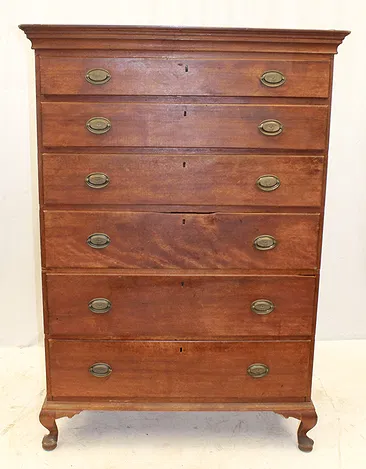
18th C Birch and Pine 6 drawer
A fine late 18th century New Hampshire 6 drawer tall chest crafted in birch and pine retaining a beautifully aged old red wash that has developed the rich warm patina over more than two centuries. It’s clean proportions, elegant, molded cornice, and graceful bracket feet reflect the restrained sophistication of early New England craftsmanship. The chest descended from the Estate of Matthew J. King, adding an appealing layer of provenance to an already outstanding example of New Hampshire furniture. A timeless piece that would be equally at home in a country farmhouse, a Federal home or a refined Americana collection.
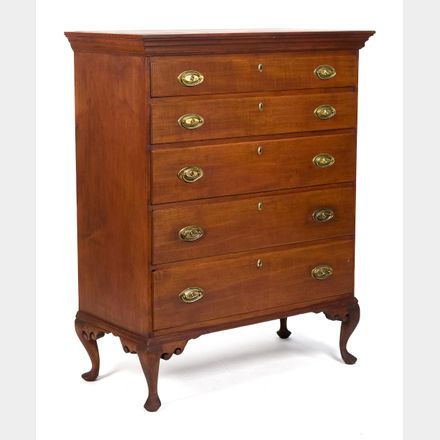
A CA 1780 New Hampshire Queen Anne Five drawer chest
A CA 1780 New Hampshire Queen Anne Five drawer chest . With a molded top and Dove tail construction. Attributed to the Dunlap workshop.
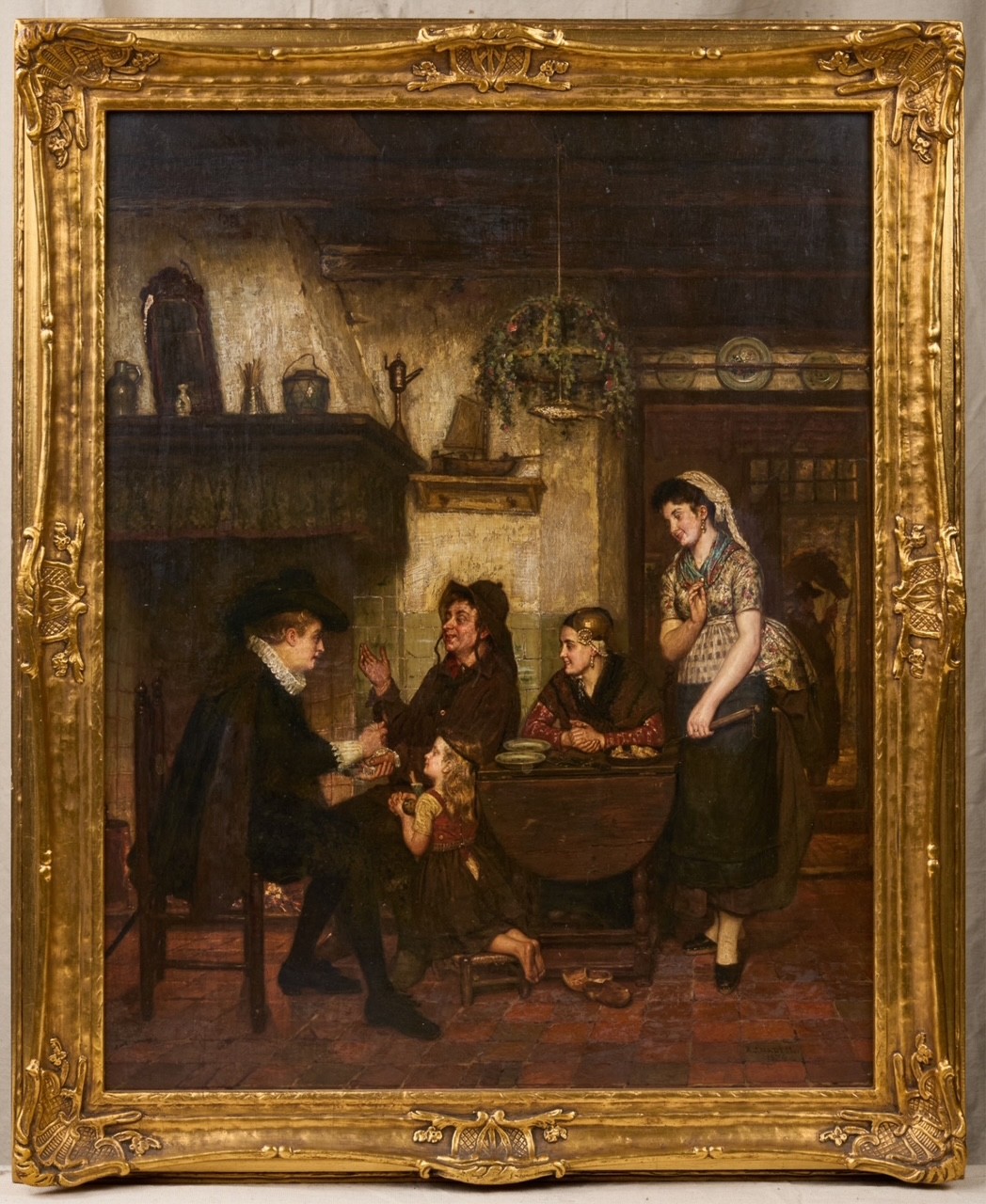
Adriaan Jan Madiol 1845-1892
The Bride Price by Adriaan Jan Madiol (1845–1892) Oil on panel. A captivating nineteenth-century interior scene by Dutch-Belgian genre painter Adriaan Jan Madiol, depicting the traditional negotiation of a bride's dowry within the warmth of a family home. Rich in narrative detail and emotional expression, the composition invites the viewer into an intimate moment as generations gather around the table while the central figures negotiate the young bride's future. Madiol was admired for his ability to combine finely rendered interiors with expressive figures, creating paintings that tell compelling stories while celebrating everyday life. The warm palette, careful attention to period furnishings, and animated interactions between the family members make this an especially engaging example of his work. Presented in an ornate gilt frame, The Bride Price is an appealing example of late nineteenth-century European genre painting and would make an exceptional addition to a collection of Continental art or traditional interiors.
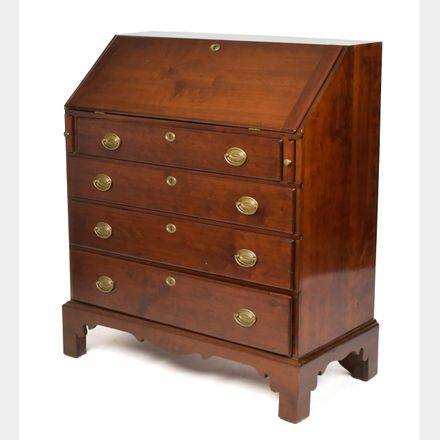
CA 1780 CT Chippendale Cherry slant lid desk on a bracket base
In a nice small size. Connecticut Chippendale Cherry Slant-Lid Desk on a bracket base. Circa 1780 Some pieces quietly tell the story of early America. Others invite you to imagine the lives that unfolded around them. This handsome Connecticut Chippendale slant-lid desk does both. Crafted in richly figured cherry around 1780, the desk was built during a period when the home served as both residence and workplace. Here, correspondence was written by candlelight, family accounts were carefully recorded, and treasured documents were safely tucked into the thoughtfully arranged interior behind the slant front. Every drawer, compartment, and proportion reflects the remarkable skill of Connecticut cabinetmakers during the late eighteenth century. What makes this desk especially desirable today is its wonderfully diminutive size. Unlike many larger examples, it offers all of the elegance and functionality of a classic Chippendale desk while fitting comfortably into today's homes. The warm cherry has developed a beautiful, mellow patina over more than two centuries, complemented by graceful bracket feet and pleasing original proportions. The desk remains a handsome and highly functional example of early American craftsmanship. It presents beautifully and would be equally at home in a historic residence, library, study, or thoughtfully designed contemporary interior where authentic eighteenth-century furniture is appreciated. Condition: Beautiful overall presentation with rich color and an appealing old surface. One bracket foot has undergone a minor historic structural repair that has been discreetly stabilized, leaving the desk structurally sound while preserving its period character.
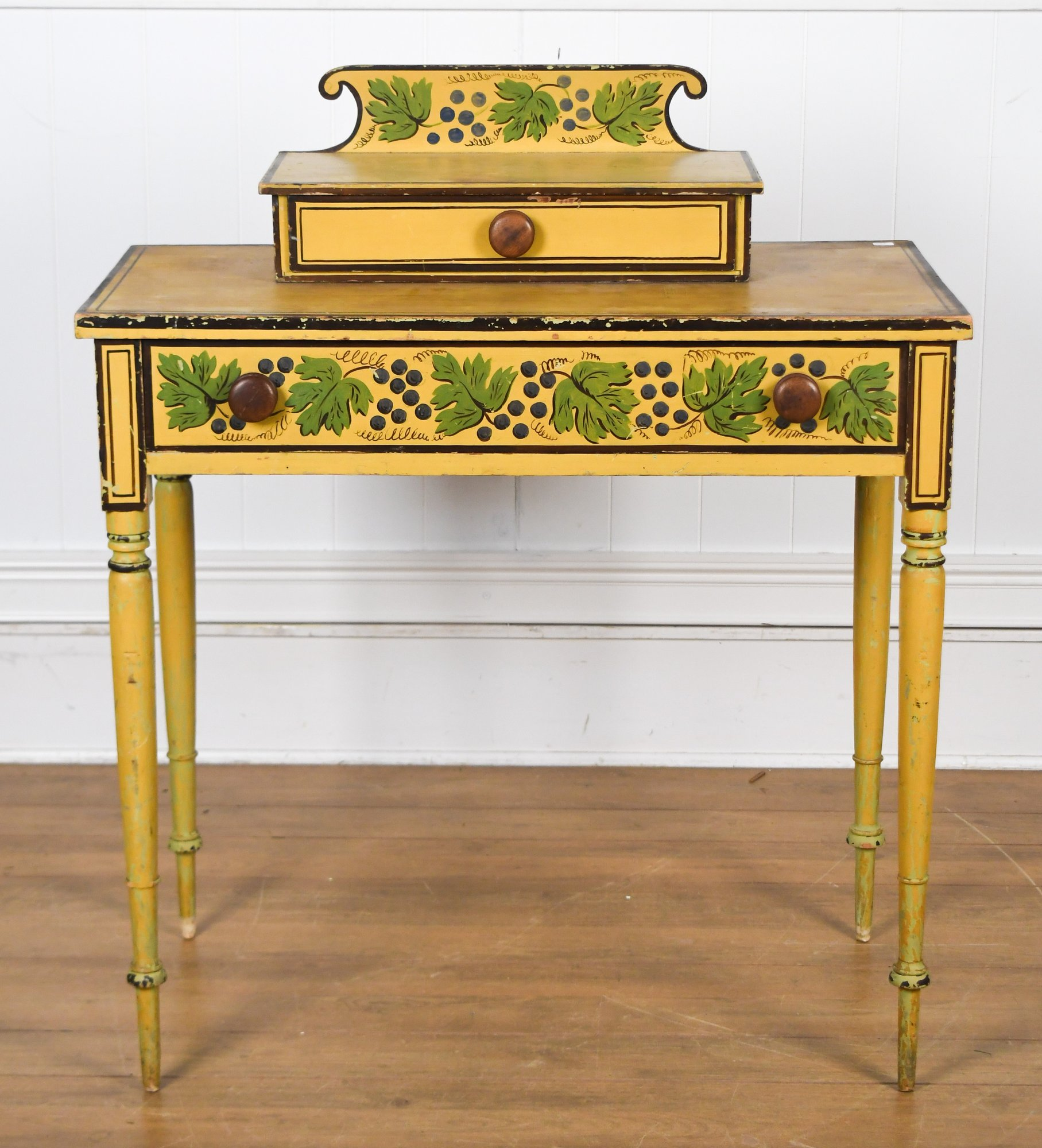
Early 19th Century New England Painted Stand with Drawer
This charming early 19th century New England painted stand retains a beautifully aged yellow painted surface highlighted by hand painted grapevine decoration and delicate black line work. The single long drawer is complemented by a smaller upper drawer beneath a graceful, scrolled gallery while the slender turned legs give the piece an elegant light appearance. Constructed with hand-cut dovetails period joinery, and other early construction details, the stand exhibits the honest wear and rich patina expected from more than two centuries of use. Evidence suggests the painted surface is an early historic finish that has acquired exceptional character through age. Both decorative and functional, this uncommon country stand would make a wonderful addition to a collection of New England painted furniture or serve as a distinctive accent piece in today's home.
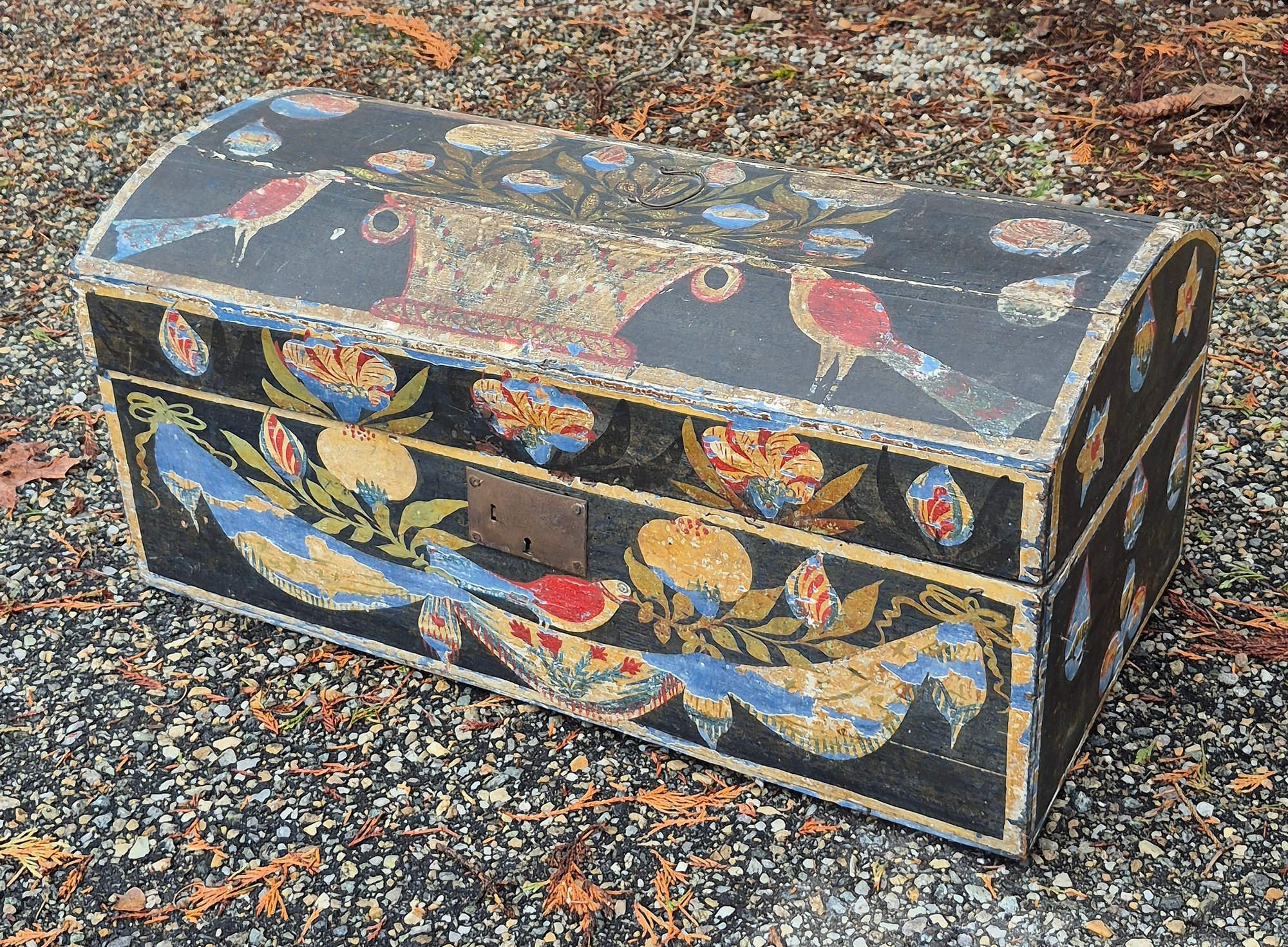
Early 19th Century Polychrome Decorated Dome-Top Box.
This fine early 19th-century domed top box is a striking example of American folk art and decorative painting. Retaining what appears to be substantially original polychrome decoration, the box features an elegant black ground richly embellished with hand painted fruit, flowers, scrolling foliage, and birds highlighted with shimmering bronze-gold pigments. The vibrant palette and balanced composition reflect the work of a skilled decorative painter and create a remarkable visual presence. Constructed of hand-planed pine with early hand-forged rosehead nails, the box exhibits all the characteristics expected of an authentic period example. The untouched interior, original hand-cut lock mechanism, and early construction details further support its age and authenticity. The box remains in honest, well-preserved condition with expected wear acquired over more than two centuries. A stable crack across the domed lid, scattered paint losses, and evidence of minor period use contribute to its character while preserving the integrity of the original surface. Rather than diminishing its appeal, these features underscore its authenticity and long history. Painted dome-top boxes of this quality are increasingly difficult to acquire, particularly those retaining such a high percentage of their original decorative surface. Equally suited for display in a sophisticated Americana collection or a thoughtfully designed interior, this piece embodies the craftsmanship, artistry, and decorative tradition of early 19th century America.
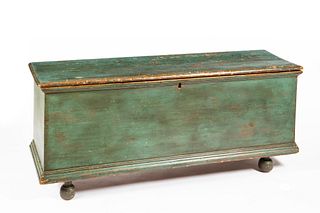
Early American green/blue blanket chest with bun feet and dovetailed construction .
Few pieces capture the quiet beauty of early American country furniture as well as a painted blanket chest. Built to safeguard treasured linens, homespun blankets, family clothing, and cherished keepsakes, these chests were among the most important pieces of furniture in an 18th or early 19th century home. This handsome example is crafted with traditional dovetailed construction and retains an appealing early green-blue painted surface that has mellowed beautifully over time. The restrained form is elevated by its turned bun feet, giving the chest a light and refined appearance while remaining firmly rooted in New England vernacular design. The rich, weathered paint exhibits the soft patina that collectors seek—evidence of generations of careful use rather than restoration. Its simple molded lid, clean architectural lines, and honest construction allow the original painted finish to take center stage, creating a piece that is both understated and remarkably decorative. Today, an authentic painted blanket chest serves equally well in a period home, a farmhouse interior, or a more contemporary setting where early American furniture provides warmth, history, and character. Beyond its visual appeal, it remains a highly functional storage piece, just as it was over two centuries ago. An enduring example of early American craftsmanship, this blanket chest embodies the practicality, simplicity, and timeless beauty that define the finest country furniture. Origin: New England, likely late 18th to early 19th century Construction: Dovetailed case with molded lid, raised on turned bun feet Finish: Early green-blue painted surface with desirable aged patina Condition: Wear consistent with age and generations of honest use.
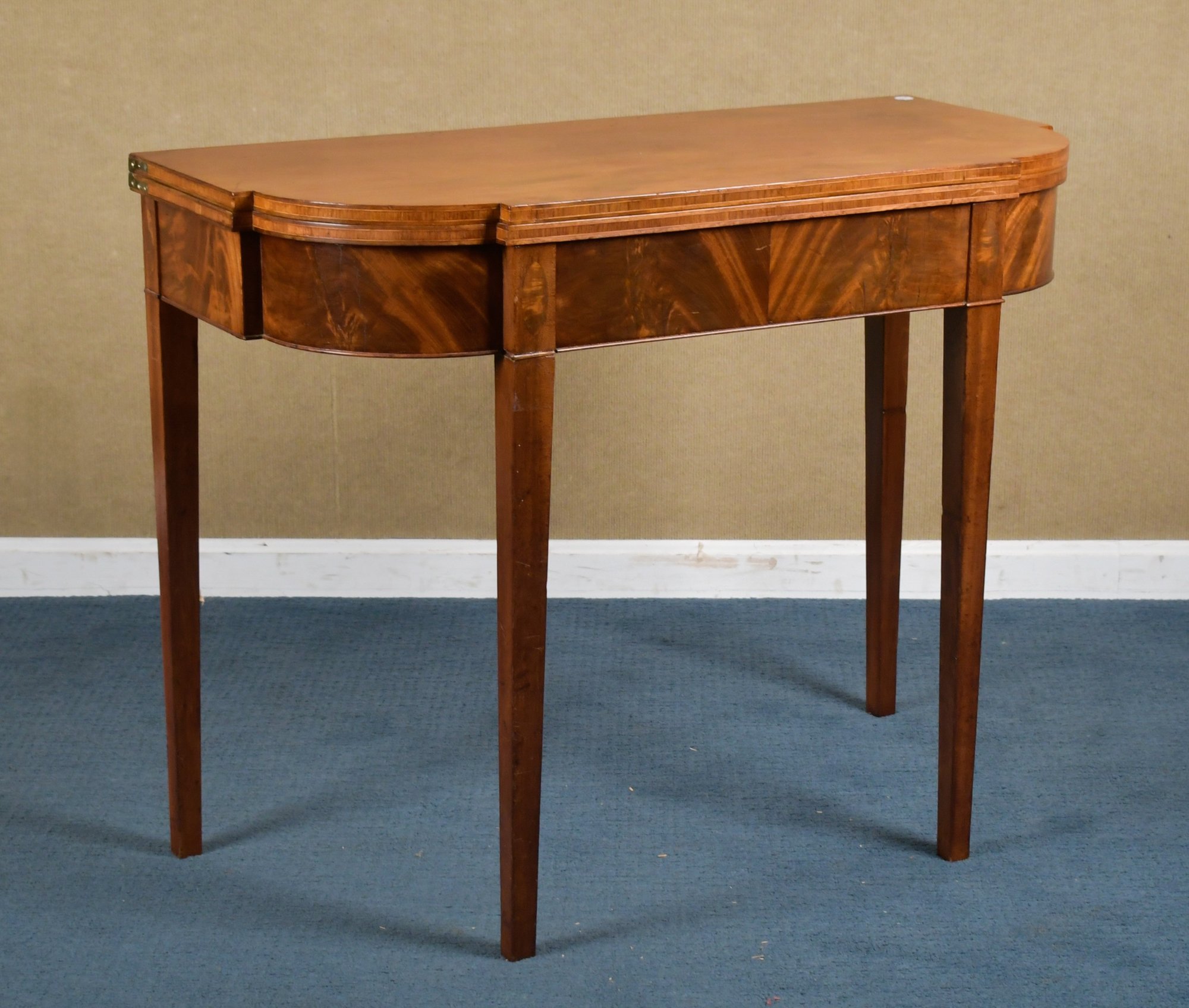
Federal Period Inlaid Card Table
Federal Period Inlaid Card Table American, Circa 1800–1820 The Federal period marked the emergence of a distinctly American style—one that embraced elegance, proportion, and exceptional craftsmanship. Inspired by the refined designs of English cabinetmakers George Hepplewhite and Thomas Sheraton, furniture of this era reflected the optimism and sophistication of the young republic. This beautifully proportioned card table is an outstanding example of that enduring tradition. Crafted from richly figured mahogany, the table displays a striking serpentine front highlighted by dramatic flame-grain veneers that shimmer as light moves across the surface. The subtle inlaid banding along the top edge provides a refined architectural detail, demonstrating the cabinetmaker's attention to proportion and restraint rather than excessive ornamentation. Designed with a folding top, the table originally served as an elegant centerpiece for evening gatherings, opening to accommodate card games and social entertainment before folding neatly against the wall when not in use. Today, these versatile tables are equally at home in an entryway, library, dining room, or living room, where they serve as beautiful console tables while retaining their original function. The clean, tapered legs exemplify the graceful simplicity that defines the Federal aesthetic. Without unnecessary embellishment, the table allows the natural beauty of its mahogany veneers and finely balanced proportions to take center stage. Pieces such as this were created for discerning households that valued craftsmanship, quality materials, and understated elegance—qualities that continue to resonate with collectors more than two centuries later. Whether appreciated as a functional piece of furniture or as an example of early American cabinetmaking, this Federal card table offers timeless appeal and remarkable versatility. Details Period: Federal, circa 1800–1820 Origin: Likely New England or Mid-Atlantic Wood: Mahogany with figured mahogany veneers and inlaid stringing Features: Fold-over top, serpentine front, tapered legs, fine flame-grain veneers, elegant Federal proportions Condition: Wear consistent with age and generations of careful use.
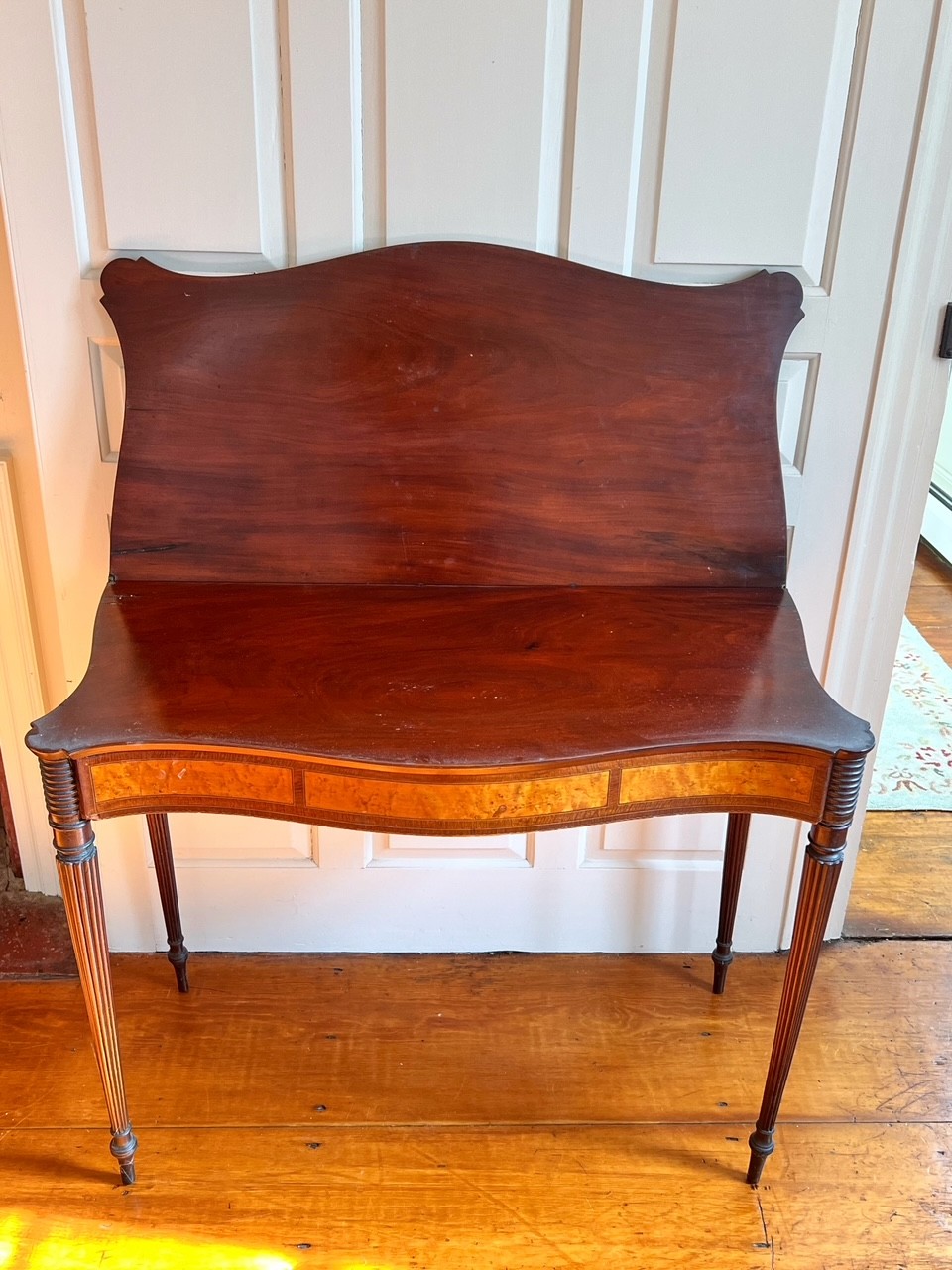
Federal Period Sheraton Card Table
Federal Period Sheraton Card Table Mahogany with Satinwood Inlay and Reeded Legs Graceful, refined, and unmistakably Federal in its proportions, this elegant Sheraton card table reflects the sophisticated taste that flourished in America during the early years of the Republic. Influenced by the designs of English cabinetmaker Thomas Sheraton, tables such as this became a hallmark of fashionable homes from approximately 1795 to 1825, where they served both as practical furnishings and symbols of refinement. Crafted in richly figured mahogany, this example is distinguished by its beautifully shaped serpentine front and delicate satinwood inlay that provides a striking contrast against the warm mahogany. The restrained elegance of the inlaid panels exemplifies the Federal preference for balance, lightness, and finely executed ornament rather than excessive decoration. The finely turned and reeded legs are among the table's most appealing features. Their graceful proportions create a visual lightness while showcasing the exceptional craftsmanship of the period. The gently bowed rear gallery adds an architectural quality that enhances the table's sculptural silhouette, allowing it to function beautifully as both a card table and an elegant console. Originally designed for entertaining, card tables occupied an important place in Federal homes, where they could be opened for games, conversation, and evening gatherings, then folded away to conserve valuable floor space. Today, they remain equally versatile—ideal in an entry hall, dining room, library, or living room as a statement piece that combines historical significance with everyday functionality. This table represents the timeless appeal of Federal craftsmanship: restrained elegance, superior cabinetmaking, and enduring beauty that has remained desirable for more than two centuries. Details Period: Federal, circa 1800–1825 Origin: Likely New England or Mid-Atlantic Wood: Mahogany with satinwood inlay Features: Serpentine front, beautifully figured veneer, finely reeded legs, shaped rear gallery, elegant Federal proportions Condition: Appropriate wear consistent with age and careful generations of use.

Fine English Mahogany Tea Caddy
Fine English Mahogany Tea Caddy England, circa 1840–1855 An elegant English mahogany tea caddy dating to the early Victorian period, retaining its original brass carrying handle, ribbon-and-swag escutcheon, fitted interior, and decorative floral paper lining beneath the lid. The restrained architectural design, accented by ebony-stained moldings and delicate string inlay, reflects the refined craftsmanship associated with quality English cabinetmaking of the mid-19th century. The interior retains a complete set of three period tinned tea canisters with brass lids, allowing the caddy to be appreciated much as it would have been when used for storing and serving prized teas in the Victorian home. The worn floral paper lining and honest surface wear speak to generations of careful use while preserving the character and authenticity collectors seek. Tea caddies such as this occupied an important place in the 19th-century household. At a time when tea remained a valuable imported commodity, the caddy served both a practical purpose and as an attractive furnishing for the parlor or drawing room. Complete examples retaining their original fitted interiors, decorative hardware, and period canisters have become increasingly difficult to find. A handsome and highly decorative example that displays beautifully while offering an authentic glimpse into the ritual of tea drinking during the Victorian era. Dimensions: 8" W × 4½" D × 4" H
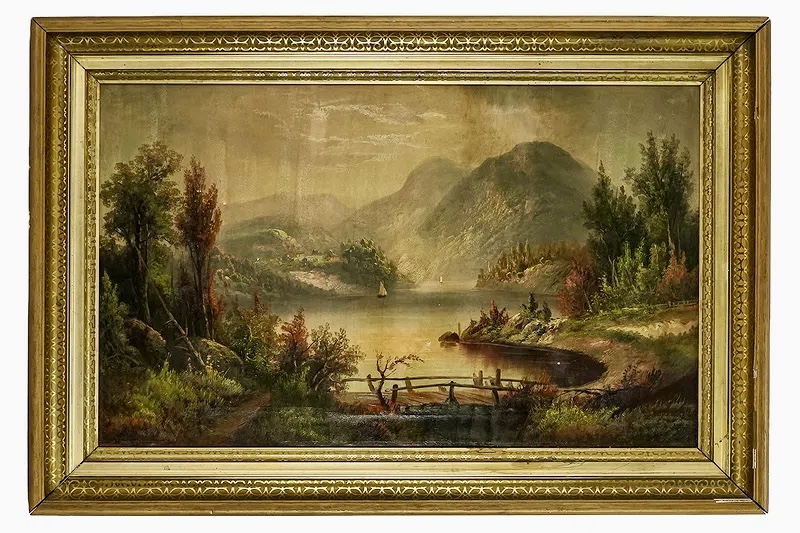
Large Hudson Valley School Painting
Hudson River School Landscape American, Mid-19th Century Few artistic movements capture the grandeur and optimism of nineteenth-century America as powerfully as the Hudson River School. More than simply landscape painters, these artists sought to express a profound appreciation for the beauty, majesty, and spiritual significance of the American wilderness. Their paintings celebrated a young nation blessed with extraordinary natural beauty and invited viewers to pause and reflect on the harmony between humanity and the natural world. This impressive landscape embodies the finest traditions of the Hudson River School. A tranquil lake draws the eye toward soaring mountain peaks, while a small sailboat glides quietly across the still water, providing both scale and a gentle reminder of mankind's place within nature's vastness. Richly detailed foreground vegetation, dramatic atmospheric light, and carefully balanced composition create a remarkable sense of depth, inviting the viewer to step into the scene. One of the defining characteristics of Hudson River School paintings is their ability to tell a story without words. The rustic fence in the foreground suggests the presence of those who settled and cultivated the land, while the distant mountains and luminous sky evoke a sense of wonder and possibility. Rather than depicting wilderness as something to be conquered, the artist presents it as something to be admired, respected, and preserved. The warm, golden light filtering across the landscape—a hallmark of many Hudson River School compositions—transforms an already beautiful view into one that feels almost timeless. It is this interplay of light, atmosphere, and carefully observed detail that has made these paintings among the most admired works in American art. Today, Hudson River School paintings remain highly sought after by collectors for both their historical importance and their enduring decorative appeal. Whether displayed in a period home or a contemporary interior, they bring a sense of peace, grandeur, and connection to America's artistic heritage. More than a landscape, this painting is a celebration of the American spirit—a reminder of a time when the nation's greatest treasures were found in its rivers, mountains, forests, and skies. Details School: Hudson River School Date: Mid-19th Century Medium: Oil on canvas Frame: Period gilt frame Dimensions: To be provided Condition: Consistent with age and careful preservation.
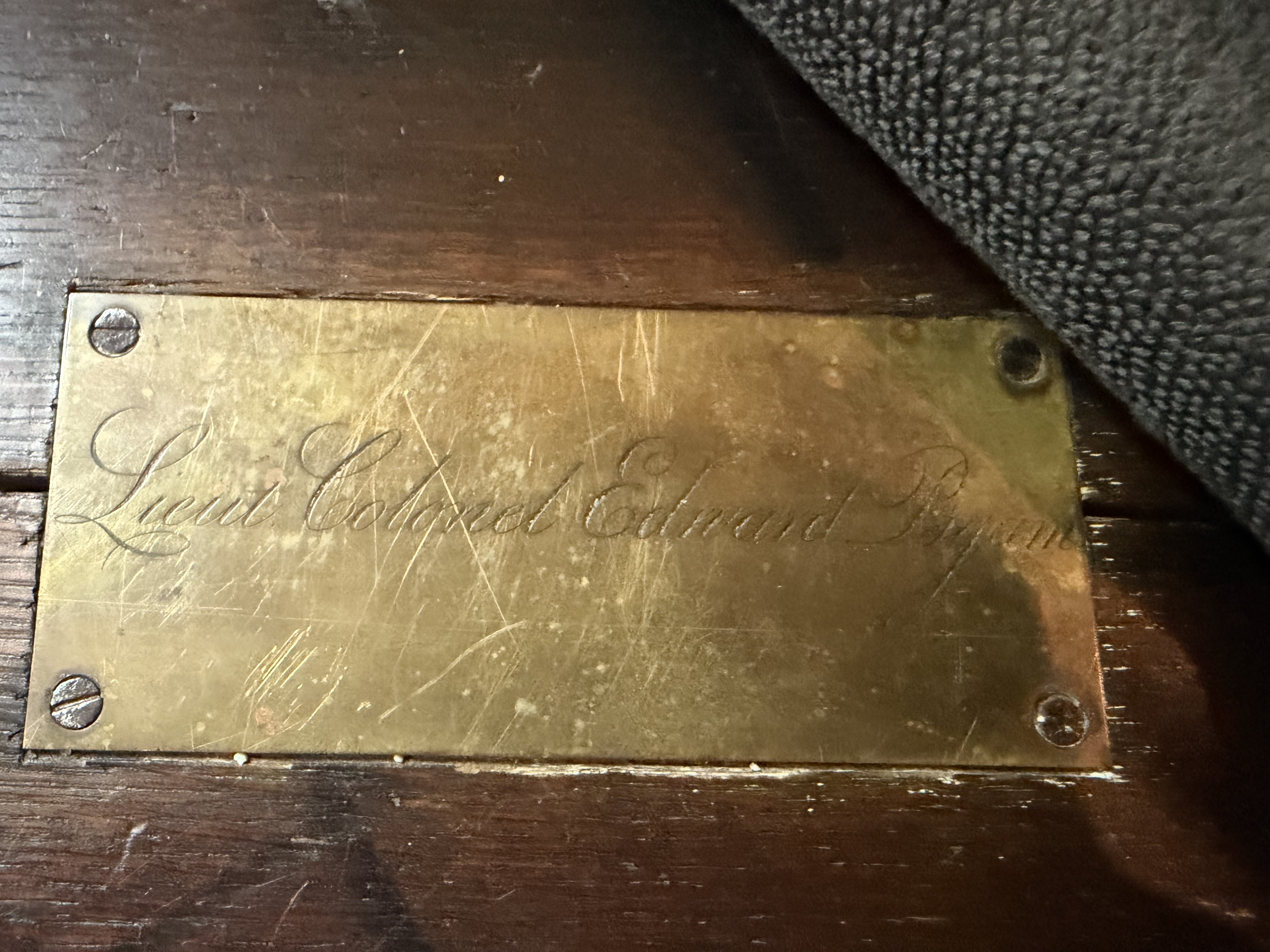
Lt Col Edward Byam Chest
Nameplate for the chest - pictures to come of this extraordinary piece.
Objects with provenance, age, and presence.
Justine Chamberlain Antiques specializes in carefully selected furniture, decorative arts, paintings, and historic objects. Each piece is chosen for visual character, construction quality, patina, and suitability for refined interiors.
The collection is intended for collectors, designers, and homeowners seeking authentic pieces with warmth, history, and distinction.
Inquire